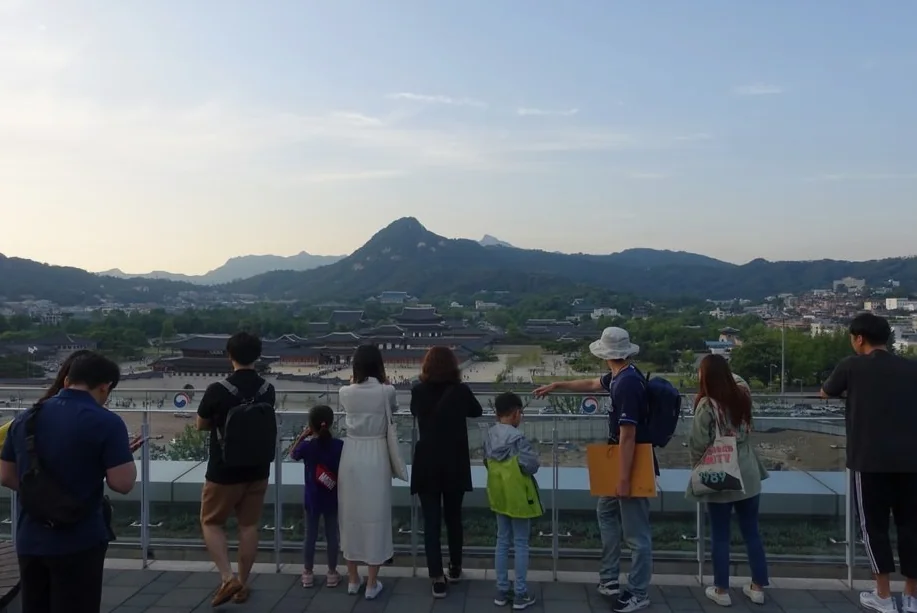
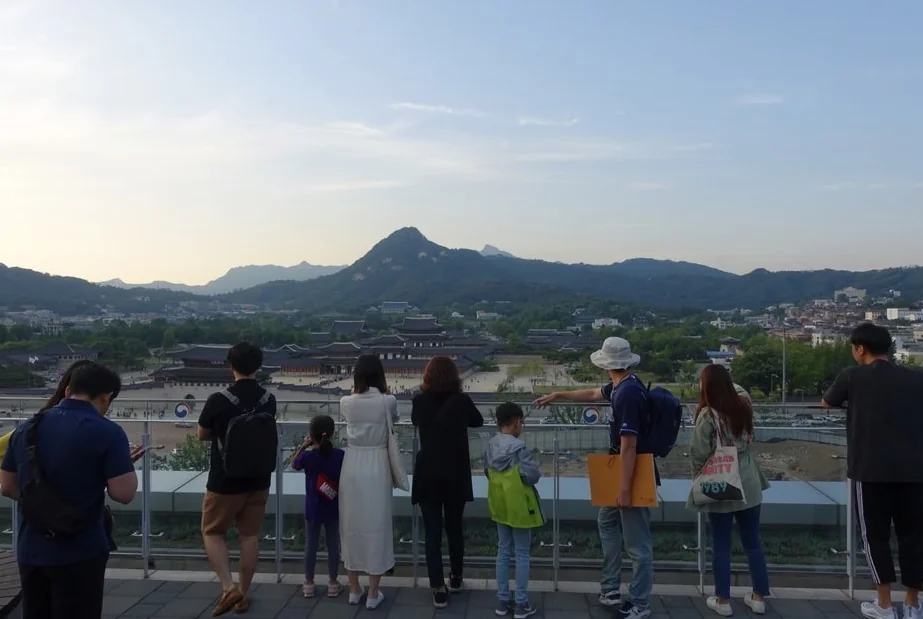
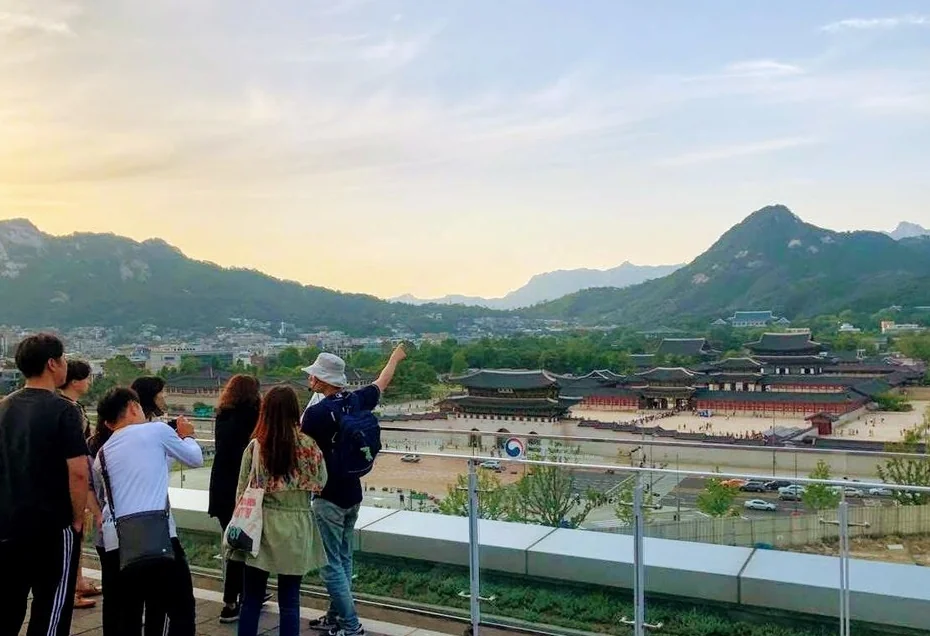
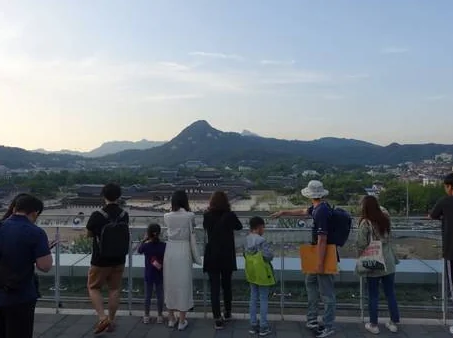
Stand on the 8th-floor rooftop of the National Museum of Korean Contemporary History at 9:15 AM. From this vantage point, you get a perfect, unobstructed view of Gyeongbokgung Palace and the granite peaks of Bukak Mountain before the tourist buses clog the Gwanghwamun gates. This specific spot is my favorite way to start any Seoul guide because it shows the geometric precision of Joseon Dynasty history in one glance. Most visitors walk right past the museum, but the elevator is free, and the view is worth more than any paid observatory.
The Hidden Logic Behind Hangeul at Gwanghwamun
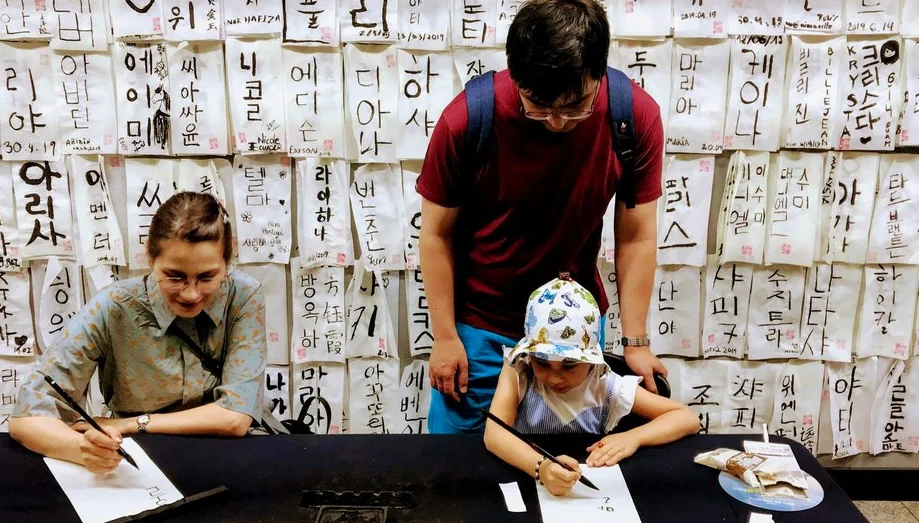
Gwanghwamun Square serves as the symbolic heart of Korea travel, featuring the massive bronze statues of Admiral Yi Sun-sin and King Sejong the Great. The square is designed to honor the scientific and military achievements of the Joseon Dynasty, specifically the creation of Hangeul, the Korean alphabet. Visiting early in the morning allows you to examine the celestial globes and rain gauges near the King Sejong statue without a 20-minute wait for a photo.
While many tourists just take a selfie and leave, the real secret lies underground. Beneath the statue is a museum that explains the linguistic logic of Hangeul. Unlike other scripts, Hangeul was designed phonetically to mimic the shape of the human mouth during speech. If you are planning your Korea itinerary, spending 40 minutes here makes the rest of your Korea trip much easier, as you'll start recognizing the patterns on street signs. From here, it is a simple 10-minute walk toward the skyscrapers of Jongno to find a completely different atmosphere at Jogyesa Temple.
Finding Zen at Jogyesa Temple
Jogyesa Temple is the headquarters of Seon Buddhism in Korea and functions as a spiritual oasis amidst the high-rise office buildings of central Seoul. Unlike mountain temples that require a hike, Jogyesa is accessible and vibrant, known for its 500-year-old lacebark pine tree and the massive gold-plated Buddha statues inside the main hall. It is the primary venue for the Lotus Lantern Festival held every spring, which transforms the entire neighborhood into a sea of color.
I usually tell my friends to look for the hidden stone pagodas tucked behind the main hall. While the front area is often crowded with people taking photos of the flowers, the side paths offer a quiet space to observe a Buddhist monk conversation or hear the rhythmic chanting of Buddhist scriptures. If you have more time, the temple offers a Templestay experience where you can learn about the 108 prostrations. For those hungry for authentic flavors, the surrounding area is famous for Korean temple food, which uses no garlic or onions but relies on deep, fermented flavors from mountain herbs.
"You can see the core points of Seoul within a short timeframe by following this specific route from the palace to the temple." [1]
Navigating Bukchon Hanok Village Like a Local

Bukchon Hanok Village is a preserved Yangban residential area where high-ranking officials lived during the Joseon Dynasty. To get there, take the Subway Line 3 Orange Line to Anguk Station Exit 2 and walk straight for about 7 minutes. The village is famous for its narrow alleys and traditional Hanok architecture, characterized by tiled roofs and the ingenious Ondol heating system that keeps floors warm in winter.
The biggest mistake travelers make is arriving at the Gahoe-dong viewpoint at noon. By then, the narrow alleys are packed with people in rented traditional clothing. Hanbok rental price usually averages around ₩20,000 ($15) for two hours, but walking those hills in heavy fabric under the sun can be exhausting. Instead, aim for 8:00 AM for early morning photography. You’ll have the shadows of the eaves all to yourself. Also, remember that people actually live here; signs everywhere ask for silence, and the local 'silence guides' take their jobs very seriously.
Seochon vs Bukchon: Which Neighborhood Suits You?
While Bukchon is grand and historical, Seochon (to the west of Gyeongbokgung) feels more like a lived-in neighborhood with small galleries and Wonseo-dong workshop spaces. Bukchon is better for seeing the classic, high-roofed homes of the elite, whereas Seochon offers a mix of 20th-century history and trendy cafes. If you want the iconic "Seoul skyline meets old roof" photo, Bukchon is the winner, but for a quiet traditional tea house experience, Seochon's side alleys are much more peaceful.
Essential Stops for Early Morning Photography
The best shot in Bukchon isn't just the main uphill street. Head toward the Samcheong-dong walking route for a view that looks down over the contrast of traditional tiles and modern glass buildings. The stairs leading down to Samcheong-dong are steep, but they offer a great perspective on how the city has grown around its royal palace history. If you're looking for Korea hotels, staying in a Hanok guesthouse in this area is a memory you won't forget, though be prepared for firmer mattresses on the floor.
| Activity Segment | Estimated Duration | Cost (KRW/USD) |
|---|---|---|
| Gwanghwamun & History Museum | 1.5 Hours | Free |
| Jogyesa Temple Visit | 45 Minutes | Free |
| Bukchon Walking Tour | 2 Hours | Free (Self-guided) |
| Traditional Tea House Stop | 1 Hour | ₩9,000 ($6.60) |
Before you wrap up your walk, head toward the Insa-dong antique shops located just across from Jogyesa. It is the best place to find handmade calligraphy brushes or traditional ceramics. If Seoul is just your first stop before Busan travel or a flight to Jeju island, this central cluster of history provides the most context for everything else you will see in the country.
- Learn the secrets of Korean history and the Hangeul alphabet at Gwanghwamun.
- Experience Buddhist prayer and find hidden pagodas at Jogyesa Temple. Enjoy the panoramic views of Seoul from the historic hills of Bukchon. The best way to experience this route is to start early and end late. By the time the Bukchon crowds become unbearable around 11:30 AM, you should already be tucked away in a quiet tea house in a side alley, watching the world go by through a wooden window frame. This balance of movement and stillness is what makes Seoul's historical core so enduring.
Frequently Asked Questions

How long do I need to see Bukchon Hanok Village and Gyeongbokgung?
You should plan for at least 4 to 5 hours to comfortably see both Bukchon Hanok Village and Gyeongbokgung Palace. Typically, visitors spend about 2 hours exploring the palace grounds and another 2 to 3 hours wandering the hilly alleys of Bukchon. If your Korea itinerary includes stopping at nearby Seoul restaurants or traditional tea houses, a full half-day is recommended. This allows you to experience the deep Korean history and Buddhism influences found in the architecture without rushing through the scenic viewpoints.
Is Bukchon Hanok Village worth visiting for free?
Yes, Bukchon Hanok Village is free to enter and is widely considered one of the most worthwhile stops on any Seoul guide. While the village itself is a public residential area with no admission fee, some specific traditional workshops or private museums may charge a small entry fee. It is a budget-friendly way to see authentic Joseon-era architecture. Most Korea tours include this area because it offers a unique contrast between ancient heritage and the modern skyline, making it a highlight of a Korea trip.
Bukchon vs Namsangol Hanok Village — which is better?
Bukchon Hanok Village is better if you want to see a real, historic neighborhood where people actually live, whereas Namsangol is a relocated collection of hanoks used as a museum. Bukchon offers a more immersive atmosphere with narrow, winding alleys and genuine Korean history. However, Namsangol is flatter and easier to navigate for those with mobility issues. For most travelers on a first-time Seoul travel experience, Bukchon is the preferred choice because it is surrounded by trendy Seoul hotels, cafes, and major cultural landmarks.
What is the best time to visit Bukchon to avoid crowds?
The best time to visit Bukchon Hanok Village is early in the morning, ideally before 9:30 AM, before the major tour buses arrive. Visiting early ensures you can take photos of the traditional streets without crowds of tourists in the background. Weekdays are significantly quieter than weekends. Since the area is a residential zone, visiting early also helps you experience the quiet, spiritual atmosphere related to local Buddhism culture before the midday rush. It’s a great way to start your day before heading to Busan travel or Jeju Island.
Are there any downsides to visiting Bukchon Hanok Village?
The main downside of visiting Bukchon Hanok Village is the physical demand of walking up many steep, narrow slopes and stairs. Because it is a living neighborhood, there are also strict noise regulations and restricted visiting hours (typically 9 AM to 5 PM) to respect the residents. Some visitors may find the crowds overwhelming during peak afternoon hours. However, if you wear comfortable shoes and follow the local etiquette, these minor inconveniences are far outweighed by the beautiful architecture and the rich sense of history that defines a classic Korea travel experience.