City Hall Station Exit 2, walk exactly 15 meters to your right. You are staring directly at Daehanmun, the main gate. No complicated navigation needed. Deoksugung Palace is the only royal compound in the center of the capital that maintains regular late night palace hours until 9:00 PM. Most international visitors wander in, take a few photos of the dark buildings, and leave within 30 minutes because they lack context. I used to do exactly the same thing. Last Thursday, I decided to test a highly rated local option to see if paying for a guided walk actually changes the experience.
When mapping out a Korea itinerary, most people heavily prioritize daytime Seoul travel before eventually moving on to Busan travel or catching a domestic flight to Jeju island. But the capital completely transforms after sunset. Rather than spending your evening at crowded Seoul restaurants or paying a premium for Korea hotels just to get a city view, a night walking tour offers ground-level history with zero daytime heat. Here is exactly what happened during my 110-minute session with the Shingihwan Guide team, including the genuine drawbacks you should prepare for.
Why a Guided Korean Royal History Tour Makes Sense
A guided Korean royal history tour provides essential context that solo visitors miss, turning empty buildings into scenes of political intrigue. The experience typically lasts just under two hours and focuses heavily on the late 19th-century transition of the nation.
I usually avoid group activities during my Korea trip planning because I hate being rushed. However, this specific location practically demands explanation. The era of Emperor Gojong and the brief Korean Empire history is complicated, filled with foreign intervention, rapid modernization, and architectural shifts. A professional storyteller guide bridges that gap. If you just read the small English plaques outside each building, you get dates and names, but you miss the actual human drama that occurred in these courtyards.
Before booking, I noticed many traveler reviews for Shingihwan specifically praising the narrative pacing. Going with an organized group immediately solves two major friction points for any Seoul guide experience:
- The hassle of buying individual tickets: The ticket booth lines can stretch for 20 minutes on cool autumn evenings. Group tours bypass this entirely.
- Limitations of viewing palaces without expert knowledge: Staring at a wooden pavilion in the dark is boring. Knowing that it was the exact spot where a king drank his first cup of coffee while hiding from assassins makes it fascinating.
Tour Route and Key Historical Sites
The standard route begins at the main gate, loops through the central throne hall, and concludes at the Western-style annexes. This path specifically highlights the contrasting architectural styles of the era, moving from traditional to modern.
The pacing is surprisingly relaxed. We did not run from building to building; instead, we spent about 15 to 20 minutes at each major stop. The guide used an iPad to show historical photographs of what the specific angles we were looking at looked like 120 years ago.
Exploring Junghwajeon Hall and Jeonggwanheon Pavilion
Junghwajeon Hall served as the central throne room, while Jeonggwanheon Pavilion was a unique leisure space blending traditional motifs with foreign design. Both structures are heavily illuminated after dark for optimal viewing.
Standing in the courtyard of Junghwajeon Hall at night is entirely different from the daytime experience. The shadows cast by the floor-level lighting make the roof eaves look massive. We then walked back to the Jeonggwanheon Pavilion. The guide's cultural heritage commentary here was excellent, pointing out the specific Russian and Romanesque influences mixed with traditional Korean pine and deer motifs on the guardrails. This is where the audio guide really proved its worth, as the speaker explained the exact diplomatic meetings that happened on that very porch.
Seokjojeon Hall at Sunset
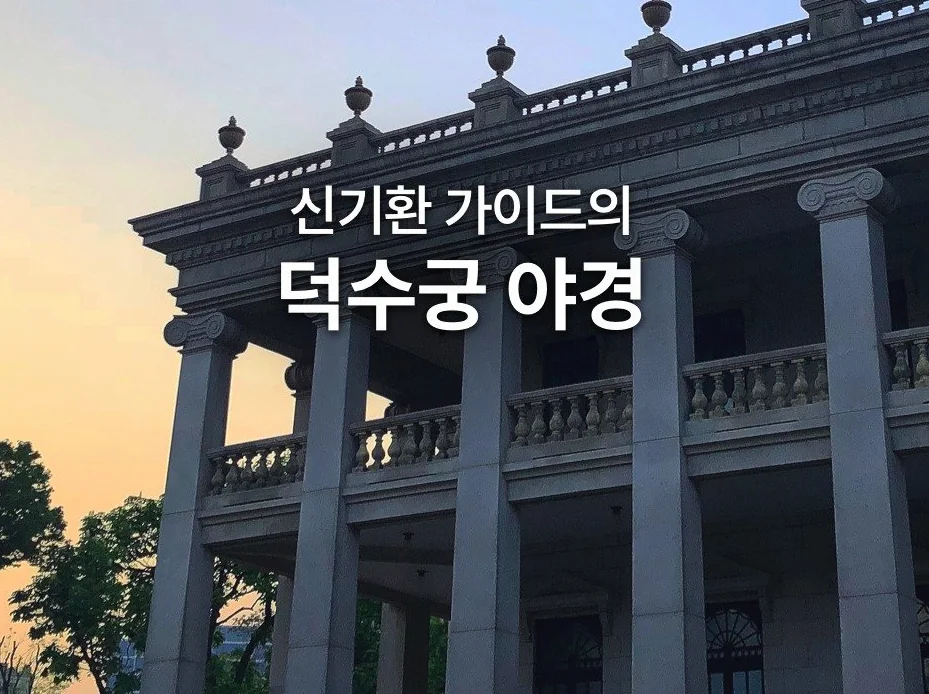
Seokjojeon Hall is a neoclassical stone building that stands out starkly against the traditional wooden structures nearby. Visiting this specific building as the sun goes down offers one of the most striking visual contrasts in the city.
If you want to practice Seoul night view photography, this is the spot. Watching the sunset hit the massive stone pillars and ornate railings of Seokjojeon Hall makes you forget you are in East Asia for a moment. This Western-style palace architecture was completed right before the fall of the empire. The guide timed our arrival here perfectly, allowing us 10 minutes of free time to take photos just as the sky turned deep blue. It easily ranks among the best photo spots in Seoul, simply because the lighting is professionally maintained.
Practical Details: Costs, Timing, and Logistics
Night tours at this specific palace generally cost around ₩15,000 to ₩20,000 ($11-$15) and run from 6:30 PM to 8:30 PM. The meeting point is usually right outside the main subway exit for easy access.
Many independent travelers don't realize that the standard admission fee ₩1,000 is incredibly cheap, which makes the markup for a tour seem high at first glance. However, when you factor in the two hours of continuous storytelling, the value is solid. When reviewing the booking page for this specific Korea tours option, I noted the exact inclusions to ensure there were no hidden fees at the gate.
"Includes admission ticket" — MyRealTrip Tour Details
| Tour Component | Specific Details |
|---|---|
| Meeting Point | City Hall Station Exit 2 (Street level) |
| Duration | Approximately 110 minutes |
| Group Size | Capped at 15-20 people typically |
| Equipment | Wireless audio receiver and earpiece provided |
The Honest Pros and Cons
The main drawbacks of this night walking tour include standing on uneven gravel for nearly two hours and occasional audio interference with the provided earpieces. Wearing thick-soled shoes and staying close to the leader easily solves these issues.
I need to be direct about the physical reality of this tour. You are standing for almost the entire 110 minutes. The palace grounds are primarily made of rough sand and gravel, which gets exhausting if you are wearing thin sneakers or heels. I wore flat walking shoes and my lower back still felt it by the end. Secondly, the wireless earpieces operate on a radio frequency. If you wander more than 15 feet away from the guide to take a photo, you will get bursts of annoying static in your ear.
On the positive side, this is a phenomenal Seoul local guide recommendation if you hate the midday heat. The temperature drops significantly, the crowds are a fraction of what you see at Gyeongbokgung, and the storytelling is genuinely engaging rather than just a dry recitation of dates.
Maximizing Your Evening Around Jung-gu Historical Sites
The Jung-gu area offers numerous post-tour activities, from walking the famous stone wall paths to visiting nearby observation decks. Most adjacent attractions close by 9:00 PM, so planning your dinner timeline is essential.
Once the tour wraps up around 8:30 PM, do not just jump back on the subway. You are perfectly positioned to explore more Jung-gu historical sites. You can walk the romantic Deoksugung Stone Wall Path right outside the side gate. If you walk about 12 minutes north, you will hit the Gwanghwamun Square extension, which is beautifully lit and much quieter at night.
If you arrive early before the tour starts, skip the busy franchise cafes at the main intersection. Instead, walk 5 minutes toward the Seoul Museum of Art nearby; the alleys there have much quieter, independent coffee roasters. Alternatively, if you manage to secure a daytime reservation, the Jeong-dong Observatory offers a fantastic aerial view of the entire palace complex, though it operates on strict hours.
If you want to catch the Changing of the Guard ceremony, you will have to visit during the day (usually 11:00 AM and 2:00 PM), as it does not happen at night. I suggest doing this night tour for the history and atmosphere, and simply walking past the main gate during the day to see the guards if you are in the area.
Frequently Asked Questions
Is the Deoksugung Palace night tour with Guide Shin Ki-hwan worth it?
Yes, the tour is highly recommended for travelers who want to understand the historical context behind the architecture rather than just taking photos. While wandering alone is free, Guide Shin Ki-hwan provides deep insights into Korea’s modern history that you won't find in standard Seoul travel brochures. It transforms a 30-minute walk into a meaningful cultural experience, making it a valuable addition to any Korea trip. Many visitors find this deeper connection to the palace much more rewarding than a solo visit.
How long does the Shin Ki-hwan Deoksugung night tour take?
The guided night tour typically lasts about 2 to 2.5 hours. This duration is perfect for a Seoul itinerary as it allows you to explore the palace grounds after dark when the atmosphere is most magical. Unlike quick self-guided walks, this pace ensures you see key landmarks while hearing detailed narratives from your Seoul guide. Since the palace stays open until 9:00 PM, the tour usually concludes in time for a late dinner at nearby Seoul restaurants or a quick commute back to your Korea hotels.
How much does the Deoksugung night tour with Guide Shin Ki-hwan cost?
Prices for this specific guided tour usually range between $15 and $25 USD per person, excluding the palace entrance fee. Compared to private Seoul tours, this group walking tour is an affordable way to get professional insights. You can usually find booking options on popular Korea travel platforms or local tour apps. It’s a budget-friendly option for those traveling from Busan or Jeju island who want to maximize their final nights in the capital with an expert guide without overspending.
Deoksugung night tour vs. Gyeongbokgung night tour—which is better?
Deoksugung is generally better for night tours because it is open year-round until 9:00 PM without requiring a difficult-to-get advance reservation. While Gyeongbokgung is larger, its night openings are seasonal and tickets often sell out instantly. Deoksugung’s central location near City Hall makes it more convenient for those staying at major Seoul hotels. If your Korea itinerary is tight, the consistency and accessibility of a Deoksugung tour led by a professional Seoul guide often provide a more reliable and stress-free experience.
Are there any downsides to the Deoksugung night tour?
The main downside is that the tour involves significant walking and standing, which might be tiring after a long day of Seoul travel. Because it takes place outdoors at night, the weather can be a factor; it may feel quite cold during winter or humid in summer. Additionally, because Guide Shin Ki-hwan's tours are popular, groups can sometimes be large, making it slightly less intimate. However, these minor issues are usually outweighed by the quality of the storytelling and the stunning nighttime palace views.